The long way home
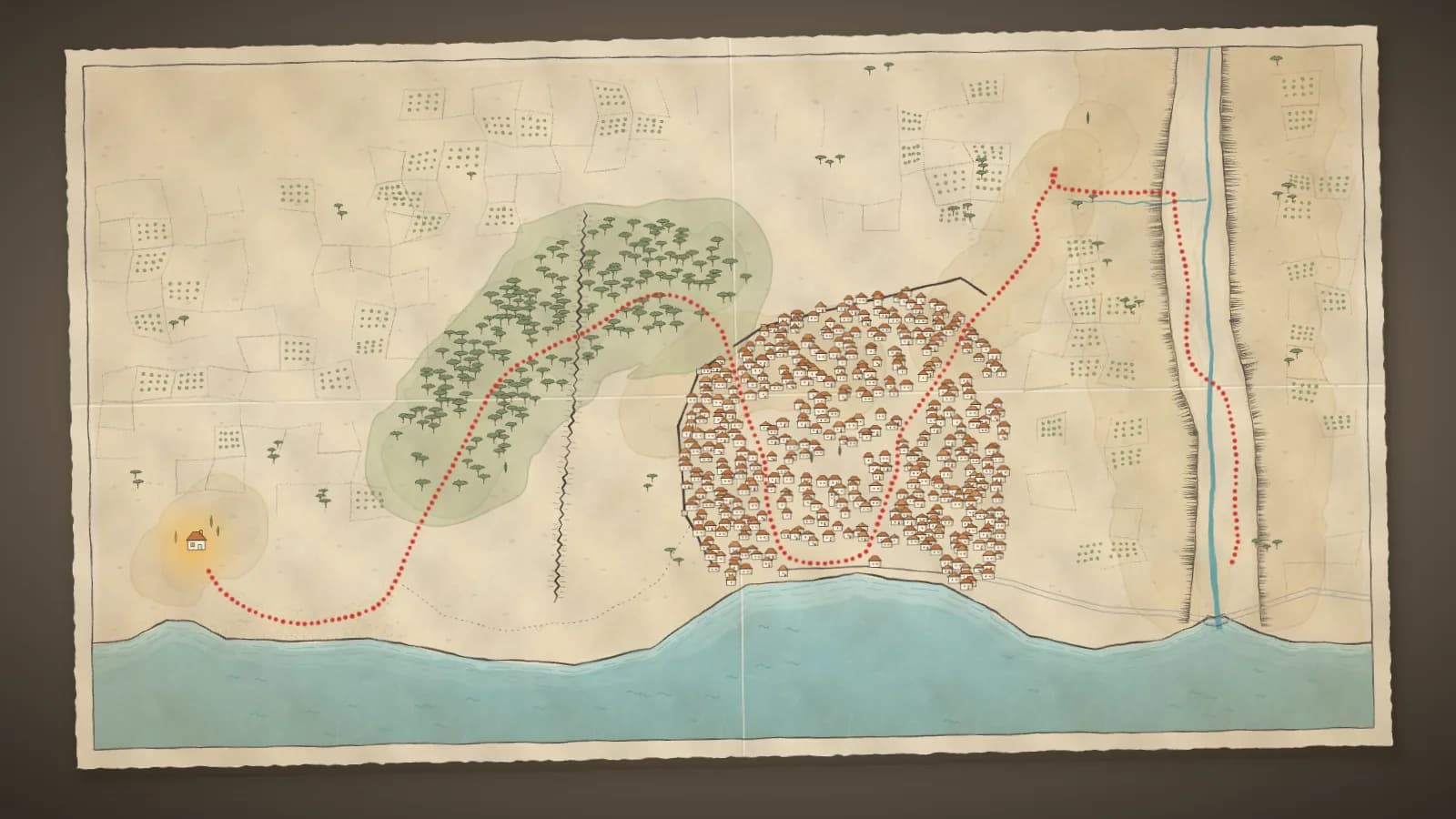
A boy chases his dog across one whole day on an invented stretch of the Dalmatian coast, always a minute behind. Morning in a river canyon, noon in a town grown inside old palace walls, dusk in the pine woods, night on the beach road. Nobody speaks, and nothing on screen tells you where to go. You can walk, and you can whistle, and somewhere ahead the dog answers. It is a story told with space, light, sound and one animal’s behavior, and the last image explains the rest of the game. The last two pictures below give the ending away.
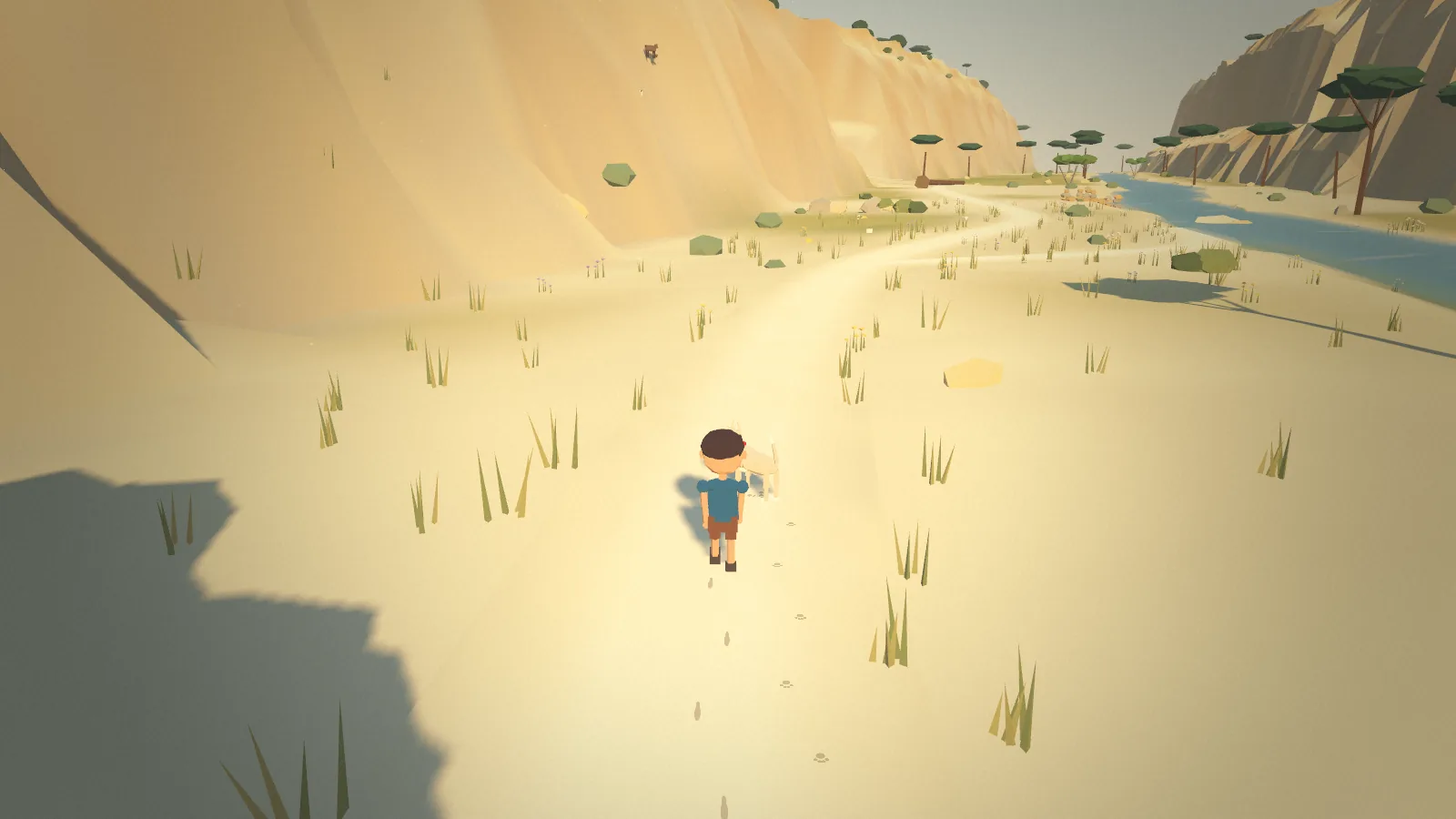
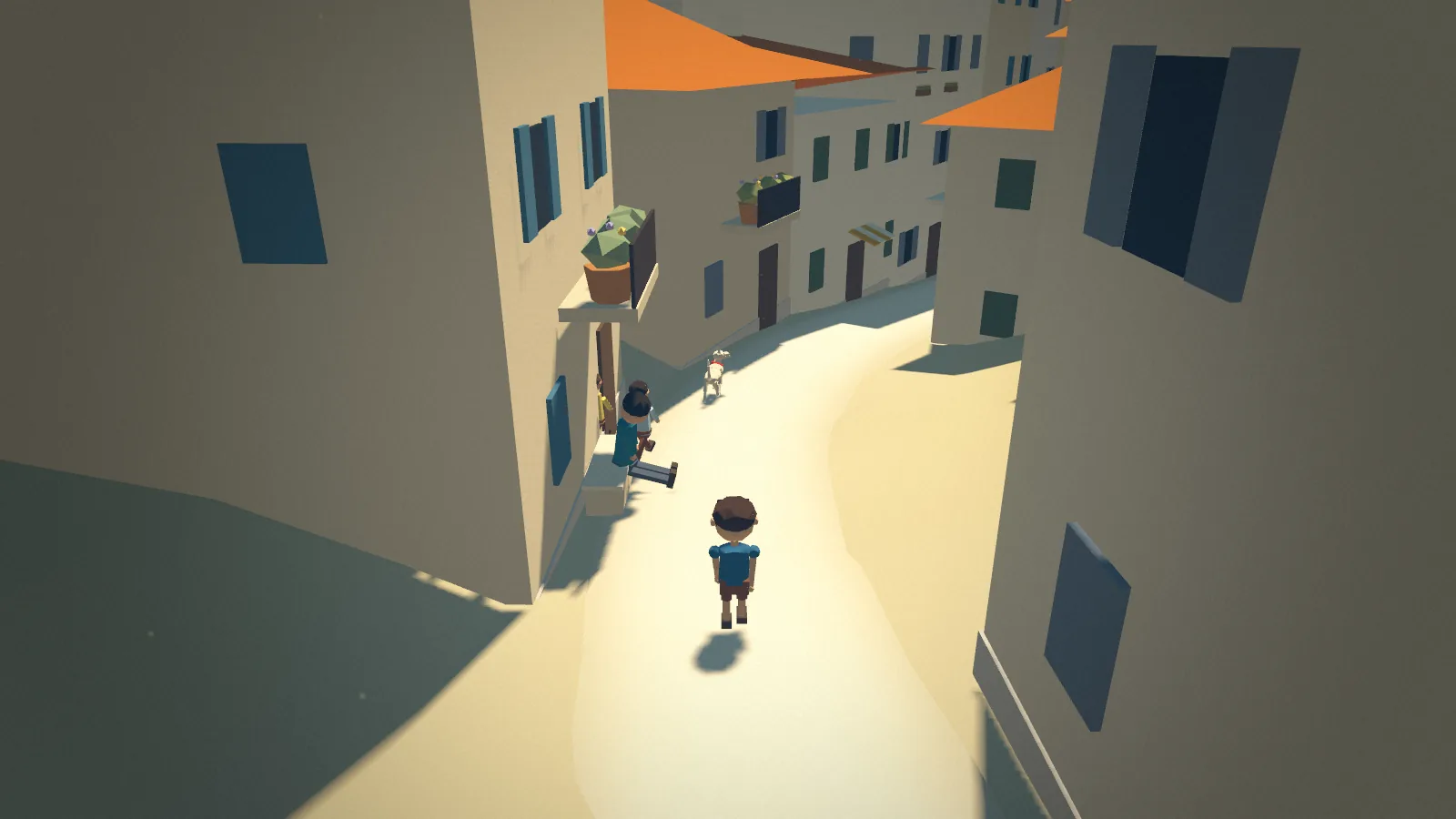
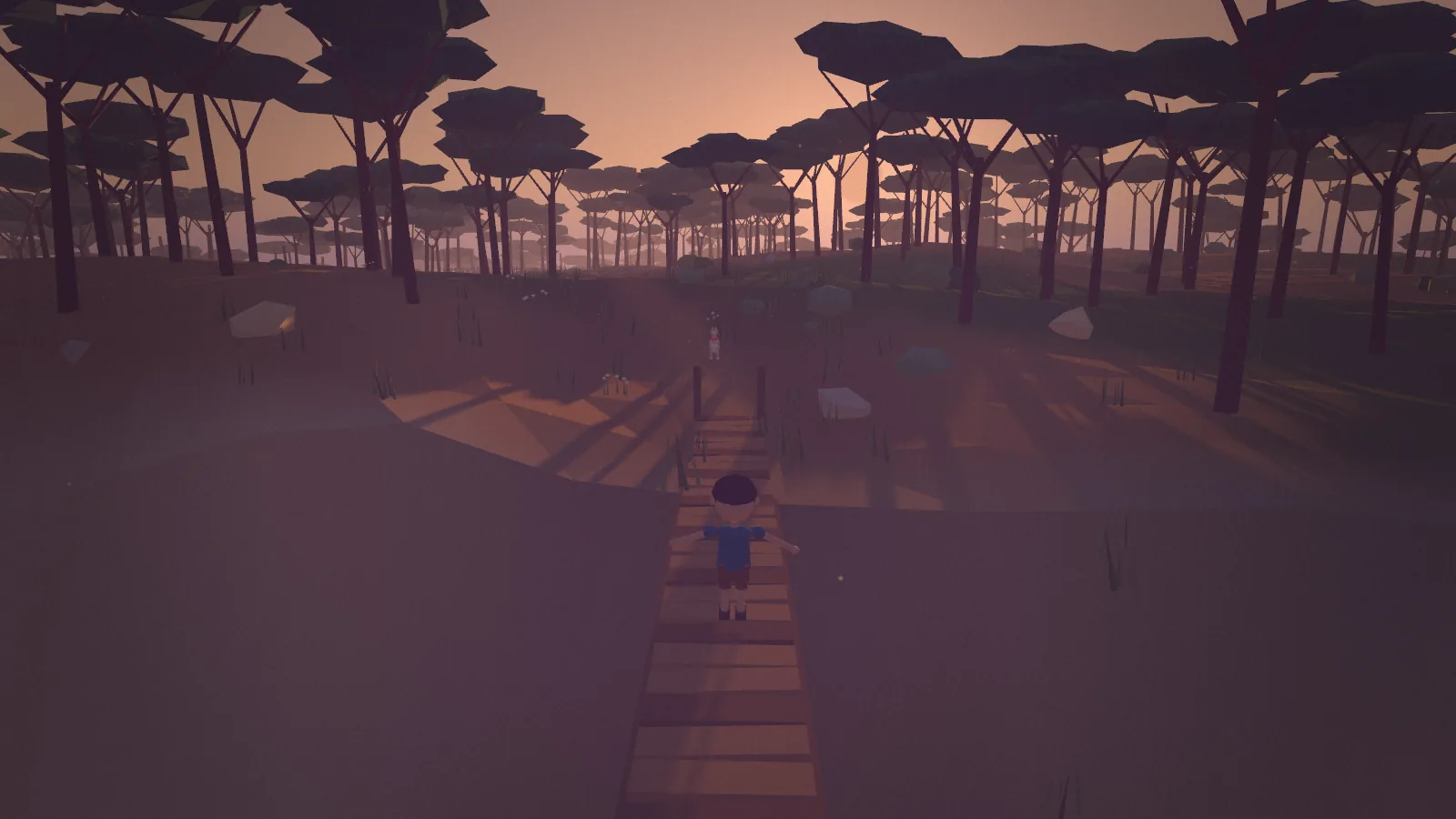
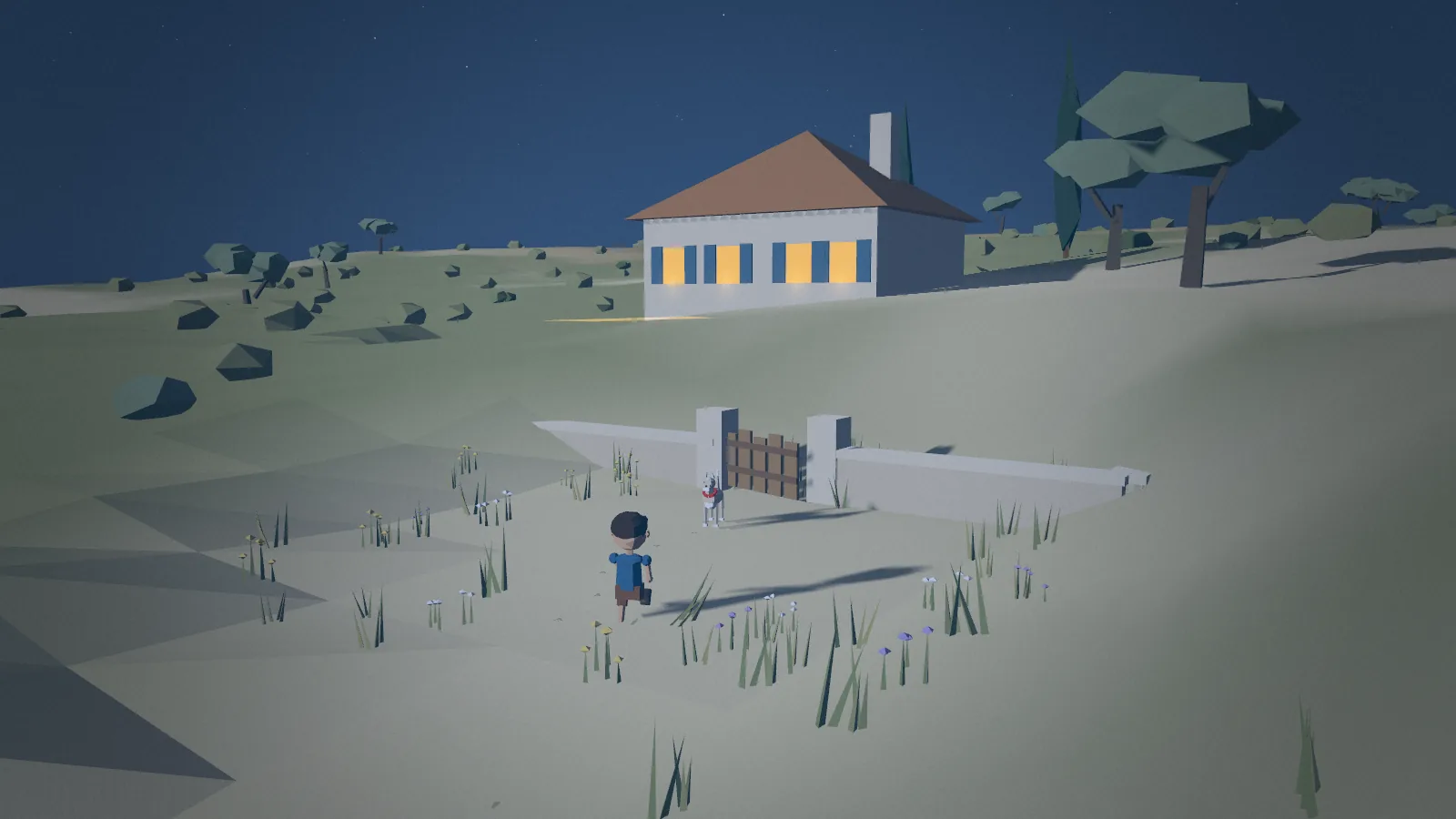
Not public yet: it is still being built. These are frames from the current build, rendered in a browser.
- Kind
- Game
- Status
- Being built
- Made with
- Three.js · No asset files · Synthesized sound
Notes
- 01Color is the progress bar
- Each chapter is a time of day and owns its own palette, so you always know roughly where you are in the story by the light alone, with no chapter numbers and no progress bar. The light is keyed to how far along the route you have walked rather than to a clock, so a player who wanders off to look at a goat is never punished with a darkness they didn’t choose. The woods are the one chapter whose light changes as you play: amber to violet to real dusk, darker than the night that follows, because the moon on the shore is meant to lift the world back up.
- 02Red belongs to the dog
- Nothing in the world is red except his collar. Roofs are burnt orange, the sunset is gold, and the market sells no tomatoes. It sounds fussy at the level of a single awning, and that is exactly the level where a rule like this dies, so a script checks every color in the code and in the running scene, and it has to pass before any change goes out. The payoff: in any frame he is in, your eye finds the collar before you know you’re looking.
- 03No signs, on purpose
- There is no compass, no marker, no minimap and no objective text anywhere. The whistle is the navigation: press it and the dog barks back from wherever he actually is, and every answer has something to see at his spot as well, birds lifting from a tree or a gate swinging, so the game works with the sound off and with one thumb on a phone. In the old town the barks echo off stone and come from the wrong directions, and you read the trail instead: pawprints in dust, a tipped crate, a fishmonger pointing down an alley. If a player gets lost, the fix is the staging, never another piece of interface.
- 04An actor, not a simulation
- The dog isn’t simulated. He performs an authored route: trot here, wait there, look back, let the boy almost catch him. A dog that decides for himself would be months of work and would tell this story worse than good staging does. His rules make the ending fair. He is never in danger. He always waits at anything hazardous until the boy is safely through. He looks back, constantly. He is always just out of reach, and never fleeing. The first time through, that reads as a dog being a dog.
- 05The map at the end
- When the day is over, the game draws the route you walked as one dotted line, in the collar’s red, across a hand-drawn map of the coast. Seen all at once, it bends around the flooded ford, the cliff path and the road. The last image is the reason the game exists.
- 06All of it is code
- There are no image, model or sound files. Every mesh, color and sound, goat bells and lapping water included, is generated when the game loads, from code and data. Each chapter is a data file: the route, the dog’s stops, the light along the way, the townsfolk, the framed shots. A new moment in the story should be a few lines of data, not a new piece of engine.
- 07Where it stands
- The whole day plays end to end in fifteen to twenty minutes; the target is forty to fifty, reached by making the routes longer and denser rather than by building more engine. An autopilot walks every chapter and measures the gaps between noticeable moments, and the last pass brought the longest stretch with nothing happening down from over a minute to under twenty seconds. It hasn’t been played through by hand since then; that comes next.