Family history
My family tree lived inside a subscription that was about to end. Everything came out of it: 4,364 people and their sources, 291 photos, a dozen documents, and the two family histories my dad wrote. Now it is a private site of our own, where the family can see the whole tree at once, follow it across an ocean on a map, add what they remember, and watch the research carry on.
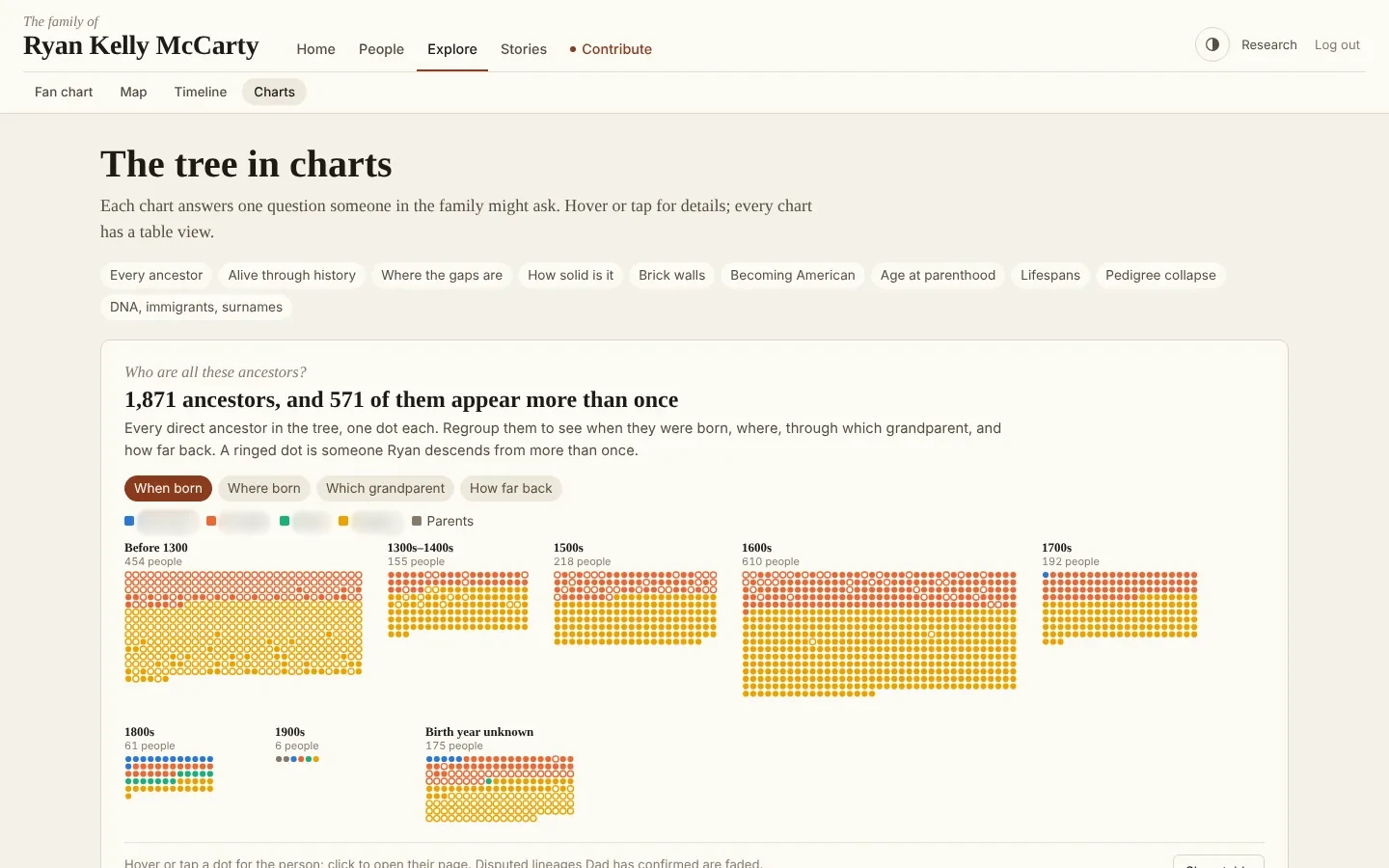
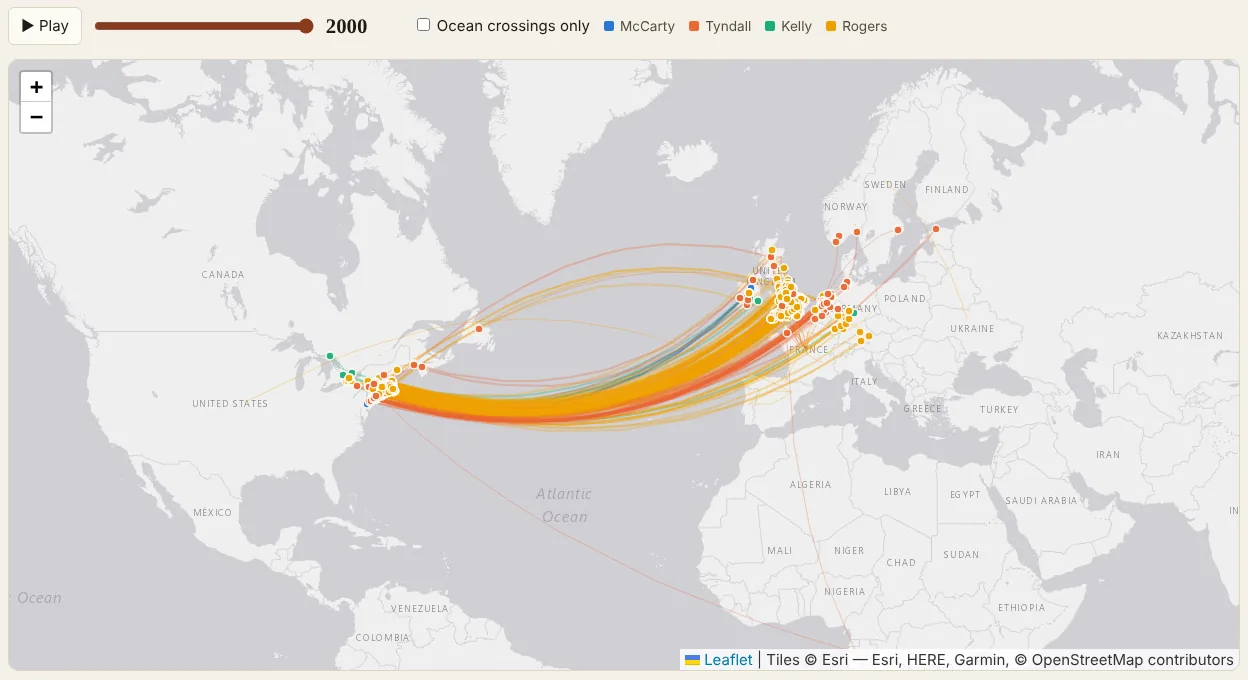
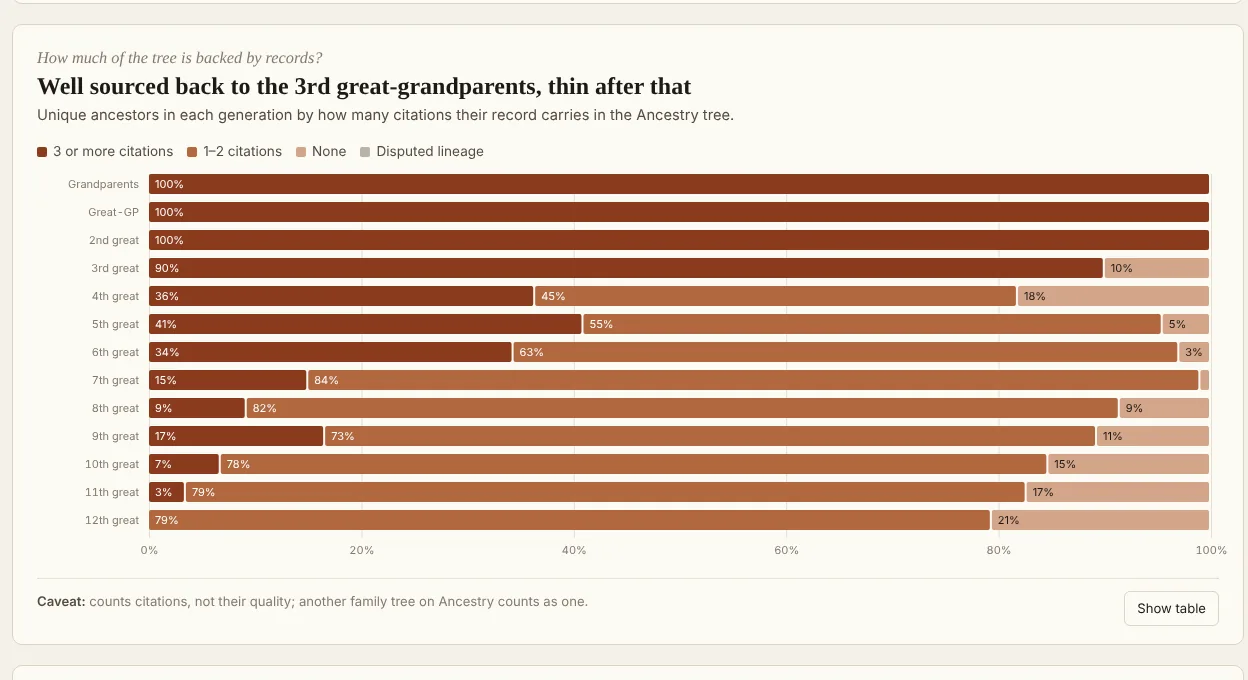
Private: it holds my family’s records, so it stays behind a family password. These screenshots are from the real site and show no living relative’s name or details.
- Kind
- App
- Status
- Private
- For
- My family
- Made with
- Static HTML · Python, no dependencies · Leaflet
Notes
- 01Owned outright
- The point was to stop renting our own history. The whole tree was exported and rebuilt as plain files: one data file for the tree, the photos at full resolution, the sources, the stories. The site is static pages, built by a handful of Python scripts that have no dependencies at all, chosen to outlast any framework I might have reached for. Nothing about it needs a subscription to keep opening.
- 02Each chart answers one question
- Genealogy software shows you a tree and a list. The questions a family actually asks are different: how far back does each line go, when did we become American, how much of this is backed by records, why does the same ancestor turn up in so many places. So the Charts tab is a set of charts, each titled with the question it answers and headlined with the answer, computed from the data rather than typed in. Every one also has a table view, for reading closely and for screen readers.
- 03Every claim gets a grade
- Family histories mix proof and tradition, and both deserve respect without being mistaken for each other. Research on the tree uses free public sources, and every claim carries a link and a grade: documented, probable, or speculative. A search that finds nothing is written down as finding nothing. Nothing is invented to close a gap, and the original export is never edited: findings sit in a separate layer on top of it, so every change traces back to its source.
- 04Memory is a source too
- Every person’s page has a box for what relatives know: a memory, a correction, a question. Contributions are stored privately and reviewed before anything is used, then graded like any other source. A family story is a lead, not proof, but it is often the only lead there is. Whoever shared it sees what became of it, next to what they wrote.
- 05Private by design
- It holds living people and real records, so it sits behind one shared family password, and no date or place for a living relative, beyond a birth year, ever reaches the browser. It loads no third-party scripts, and raw DNA files never go online.