Hungry House
We were worn out by deciding what to make long before we were worn out by making it. Hungry House drafts the week for us: it starts from the meals we already like, leaves one dinner for something new, checks every dinner against real nutrition targets, and ends in one grocery list on both of our phones. Editing the draft is optional, because every decision it asks of us is a cost.
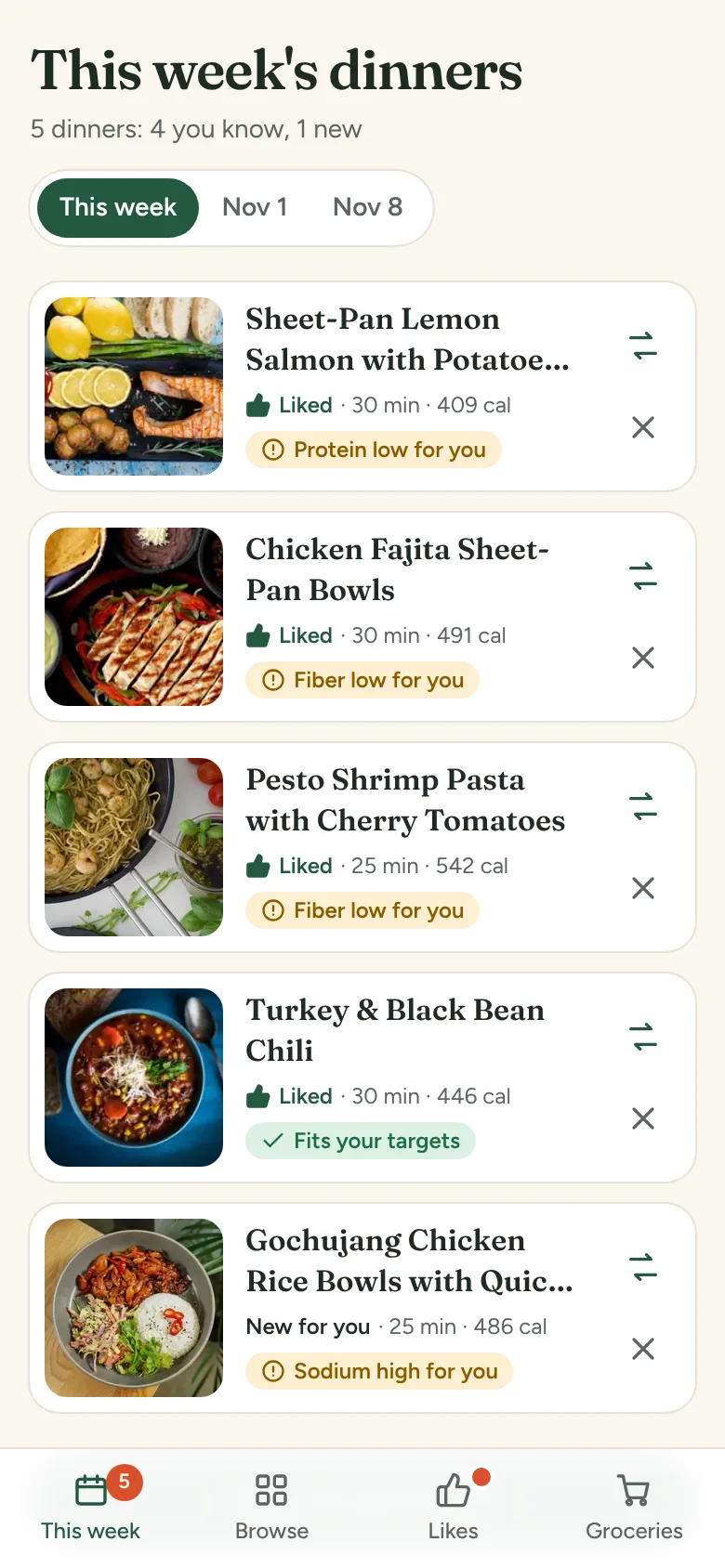
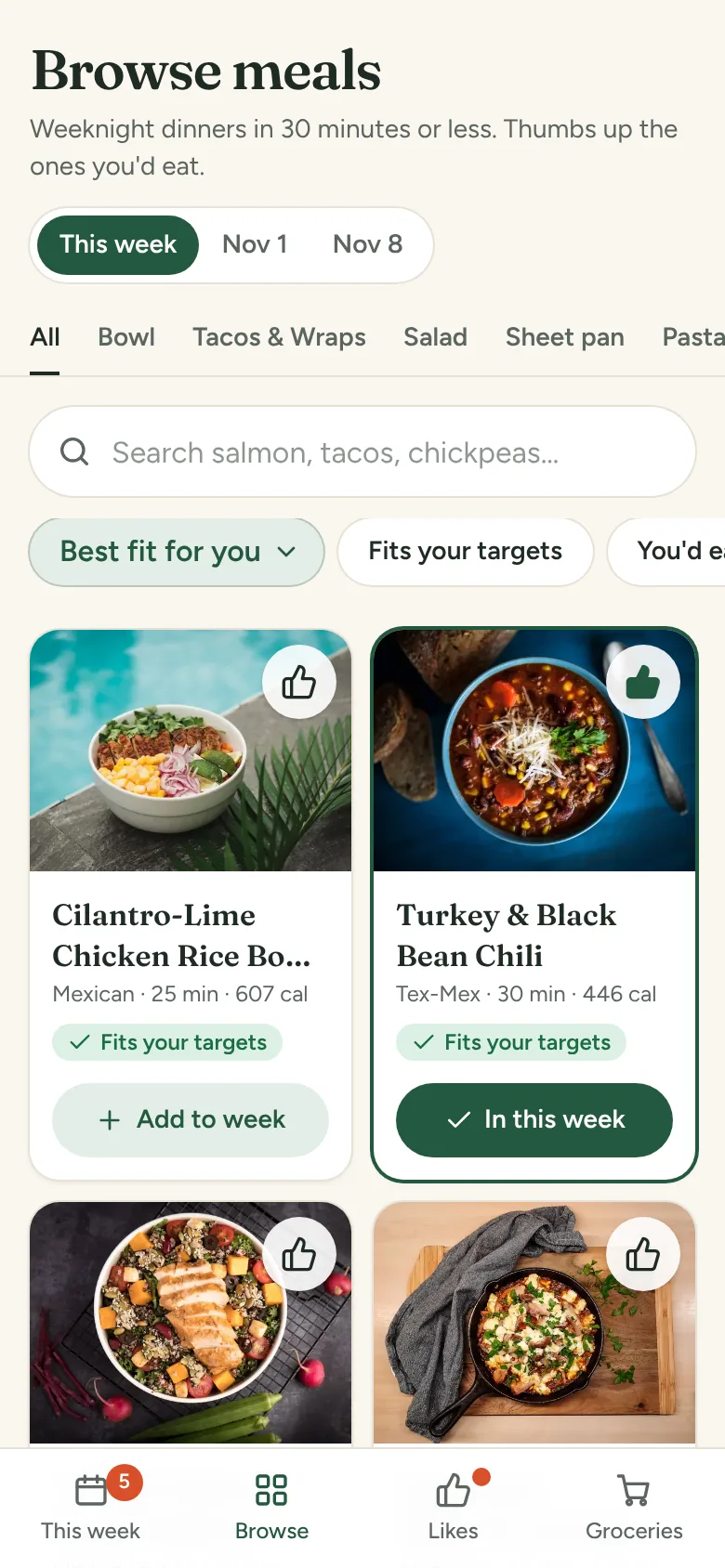
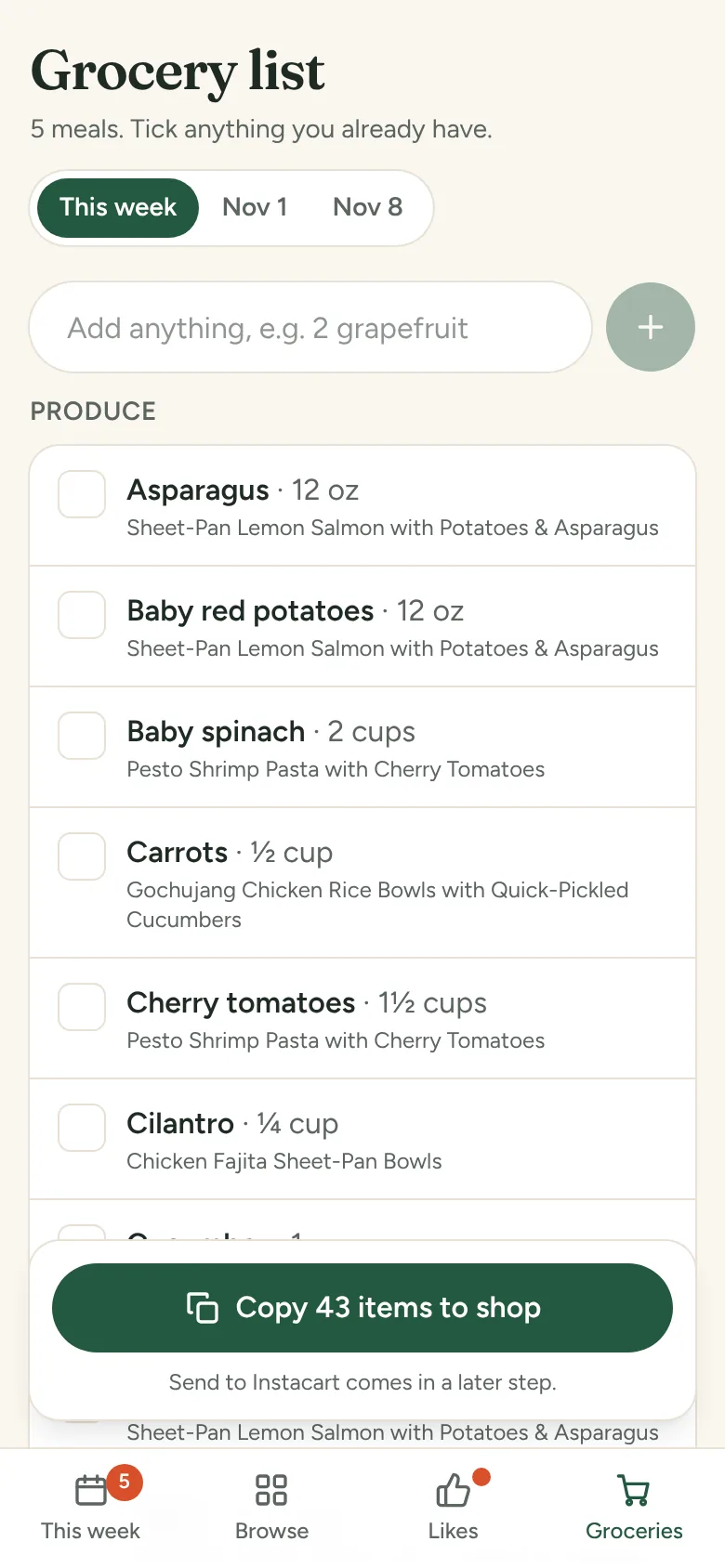
Private: it holds our household’s plans, ratings and targets, so it stays behind a passcode. These screenshots are from the real app, with a staged sample week and stock photos only.
- Kind
- App
- Status
- Private
- For
- Our household
- Made with
- Next.js · USDA food data · No paid services
Notes
- 01It started as random recipes
- The first version had a library of decent recipes and shuffled them. The first real feedback was the useful kind: “These are just random recipes. You don’t know what we eat.” A planner only feels personal when it starts from the household’s own history, so the draft now begins with our usual dinners and the ones we’ve given a thumbs up, fills all but one of the week’s dinners with them, and keeps one for a new dish that looks like the rest of what we eat.
- 02Variety is a rule
- A week has at least three proteins, no more than two of any protein or format, and no cuisine twice, so it never turns into four bowls of chicken. And nothing repeats from the weeks on either side. Thumbs are per person, and a thumbs down from either of us keeps a meal off the plan, no matter how well it fits.
- 03Every number is real
- Nutrition is calculated in code from the USDA’s food composition data, ingredient by ingredient, and never estimated by a model. A meal is flagged only for what is actually off, and the flag names it: protein low, sodium high, or fits your targets. A plan that is wrong about calories is worse than no plan, because once you catch one bad number you stop trusting the rest.
- 04The model proposes, the code checks
- There is no AI in the running app and no paid service of any kind. New recipes are written with Claude in working sessions and saved as plain files: thirty minutes or less, two servings, fitted to the targets. Before anything ships, a script reads every recipe, calculates its nutrition, and lists anything that does not add up. That splits the job along the line where each side is trustworthy: a model is good at proposing a dinner and bad at arithmetic.
- 05We had something good
- Under Likes there is a box for dinners we enjoyed somewhere else: a name and what was in it, typed from either phone. The next working session turns each one into a real recipe, and the idea flips to Recipe ready, with a photo. It is the cheapest feedback loop I could design: one sentence from us, and the plan gets a little more like us.
- 06Photos that tell the truth
- Every meal photo is picked by hand, and it has to show the dish’s actual protein and format and nothing the recipe leaves out. A salmon bowl does not get a prettier chicken bowl. When nothing fits, the meal gets a plain tile instead of a misleading picture. The screenshots here use only free stock photos; the photos in the app itself are credited to the recipe sites they came from, which is fine for a household and not for a portfolio.
- 07Built around our actual week
- Groceries arrive on Sunday and have to be ordered by Wednesday, so weeks run Sunday to Saturday and the app says when to order. Two phones edit the same plan and stay in sync, signed in with one shared passcode. Some choices are still open, like how many nights are leftovers or eating out, because the honest answer is that we don’t know yet.